It grows everywhere, but this stunning plant hides a dark and dangerous secret…
Deadly Nightshade (Atropa belladonna): The Mysterious and Dangerous Plant with a Dark Legacy
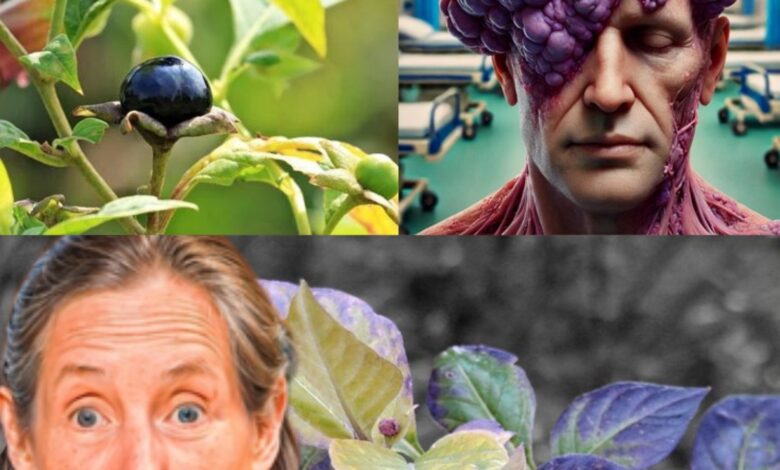
Atropa belladonna, more commonly known as Deadly Nightshade, is one of the most notorious and toxic plants in the world. With its alluring yet dangerous appearance, this plant has captivated the imaginations of many throughout history. It has long been associated with poisonings, witchcraft, and even cosmetics, leaving behind a dark and fascinating legacy. While it is extremely toxic, it also has a surprisingly rich history in both ancient and modern medicine. In this article, we will explore the dangerous allure of Deadly Nightshade, its toxic components, its medicinal uses, and the precautions needed when handling this infamous plant.
What is Deadly Nightshade?
Deadly Nightshade, scientifically known as Atropa belladonna, belongs to the Solanaceae family, which includes other well-known plants like tomatoes and potatoes. Native to Europe, North Africa, and Western Asia, this herbaceous perennial is easily recognized by its distinctive purple, bell-shaped flowers, glossy black berries, and large, dark green leaves.




Despite its beauty, every part of this plant—its leaves, berries, stems, and roots—contains powerful alkaloids that make it extremely dangerous. While some might admire its elegance, the plant’s toxic nature has earned it a dark reputation throughout history.
Toxic Components of Deadly Nightshade
The key toxic compounds found in Deadly Nightshade are atropine, scopolamine, and hyoscyamine. These alkaloids work by disrupting the normal function of the nervous system, leading to a wide range of dangerous symptoms.
Atropine: This compound affects the nervous system, causing symptoms like hallucinations, rapid heartbeat, and paralysis. It can also lead to serious poisoning if ingested in high amounts.
Scopolamine: Known for its mind-altering effects, scopolamine has been used historically as a poison and in sedatives. It can induce dizziness, confusion, and an altered state of consciousness.
Hyoscyamine: This alkaloid interferes with neurological functions, and excessive exposure can result in poisoning or even death.
These toxic compounds block neurotransmitters in the body, leading to various effects, including blurred vision, dry mouth, difficulty breathing, and, in extreme cases, death. The difference between a therapeutic dose and a lethal one is very narrow, making the plant a dangerous entity for those who are untrained in its handling.
The Historical Significance of Deadly Nightshade