Building a Hinged Hoophouse for Your Raised Bed Garden: A Comprehensive Guide
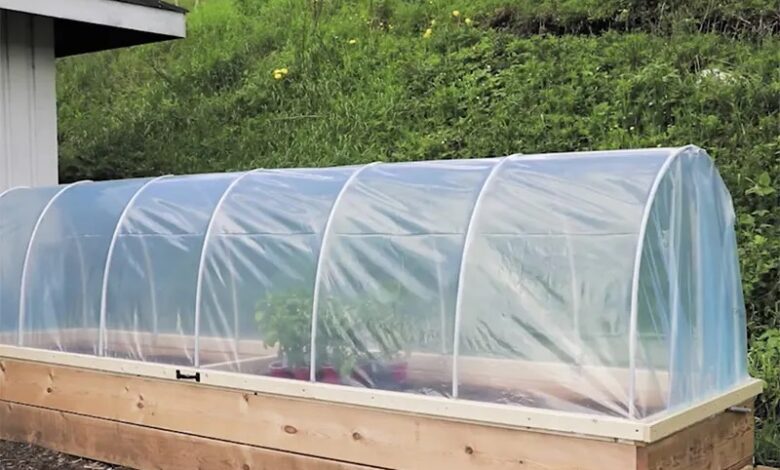
Creating a hinged hoophouse for your raised bed garden offers numerous benefits, including extended growing seasons, protection from harsh weather, and pest management. This detailed guide provides step-by-step instructions to help both beginners and seasoned gardeners construct a functional hoophouse with ease.




Materials Needed:
- PVC pipes (1/2 inch diameter)
- Heavy-duty plastic sheeting (6 mil)
- Hinges
- Screws (stainless steel)
- Wooden planks (for the raised bed frame)
- Pipe clamps
- UV-resistant zip ties
- Tools: Drill, saw, measuring tape, staple gun
Step 1: Prepare Your Raised Bed Construct a sturdy raised bed using wooden planks and ensure it’s positioned in a sunny spot in your garden. The size of your raised bed will determine the dimensions of your hoophouse, so plan accordingly.
Step 2: Measure and Cut PVC Pipes Measure the length of your raised bed and cut PVC pipes to create hoops spanning the width of the bed. Space the hoops every 2-3 feet and gently bend the pipes before inserting them into the soil or attaching them to the wooden frame with pipe clamps.
Step 3: Install Hinges Choose one side of the raised bed as the fixed base and attach hinges to the opposite side for the hoophouse opening. These hinges will facilitate easy access to your plants.
Step 4: Attach PVC Pipes to Hinges Secure the PVC pipes to the hinged side of the raised bed using screws and pipe clamps, ensuring a firm attachment that allows for smooth opening and closing.
Step 5: Cover with Plastic Sheeting Drape heavy-duty plastic sheeting over the PVC hoops, leaving excess material to cover the ends of the raised bed. Trim the plastic as needed and secure it tightly using UV-resistant zip ties and staples.